

Experiential Meditation: The Soap Bubble and the Staircase
Experiential meditation is a blending of traditional meditation, contemplation, visualization, and direct observation.
The purpose is not merely to think about an experience but to move toward experiencing it directly.
Much of our ordinary awareness is occupied with thoughts of the past, thoughts of the future, and commentary about what is happening now. In this practice, we gently allow some of those thoughts to settle and fade into the background so that attention can rest more fully in direct experience.
The breath will be our primary anchor.
The images used in this meditation are not intended as beliefs. They are tools, like a raft used to cross a river or a map used to explore unfamiliar territory.
Take a comfortable seat.
Allow the body to settle.
Allow the breath to become natural.
There is nowhere to go and nothing to achieve.
Only the experience of this moment.
Begin by imagining a large soap bubble.
Imagine that you are inside it.
Notice how the bubble creates the impression that there is an inside and an outside.
Whatever emotional state you are experiencing right now exists inside the bubble.
Now imagine that outside the bubble is a better emotional state.
Perhaps more peaceful.
More open.
More joyful.
More free.
Notice how naturally the mind creates this distinction.
Something here.
Something better there.
Yet if we look carefully, the difference may not be as substantial as it first appears.
Consider a collection of neon lights.
One tube glows red.
Another blue.
Another green.
The colors appear completely different.
Yet the electrical energy moving through each tube is the same.
The colored glass creates the appearance of difference.
Or consider different flavors of ice cream.
We may strongly prefer one flavor over another, but beneath the preference, it is all still ice cream.
In the same way, emotional states often appear radically different because of the filters through which they are experienced.
The soap bubble becomes a symbol of those filters.
Now imagine the bubble bursting.
The air inside the bubble and the air outside the bubble immediately become one.
Nothing needed to travel anywhere.
Nothing needed to cross a boundary.
The boundary was only temporary.
Rest with that image for a few breaths.
The air inside was never different from the air outside.
Only the appearance of separation created that impression.
Now bring to mind an air mattress.
Imagine trying to squeeze all of the air out by force.
You press.
You push.
You wait.
The air leaves only as quickly as the opening allows.
Then imagine connecting a pump that draws the air out effortlessly.
What took considerable effort now happens naturally.
The mind often works in a similar way.
We carry thoughts of the past.
We carry thoughts of the future.
We carry concerns, plans, memories, and unfinished conversations.
Rather than wrestling with them, we will use the breath as a gentle pump.
Not forcing thoughts away.
Simply creating conditions in which they can settle.
Begin several rounds of kapalabhati breathing.
Allow the rapid belly breaths to act like a pump, clearing stale air from the system.
Imagine thoughts of the past and future gradually being released with each exhalation.
With each breath, a little more space.
A little more openness.
A little more ease.
When that feels complete, transition to alternate nostril breathing.
Allow the breath to flow through the left and right channels.
Balancing.
Clearing.
Quieting.
Softening whatever remains.
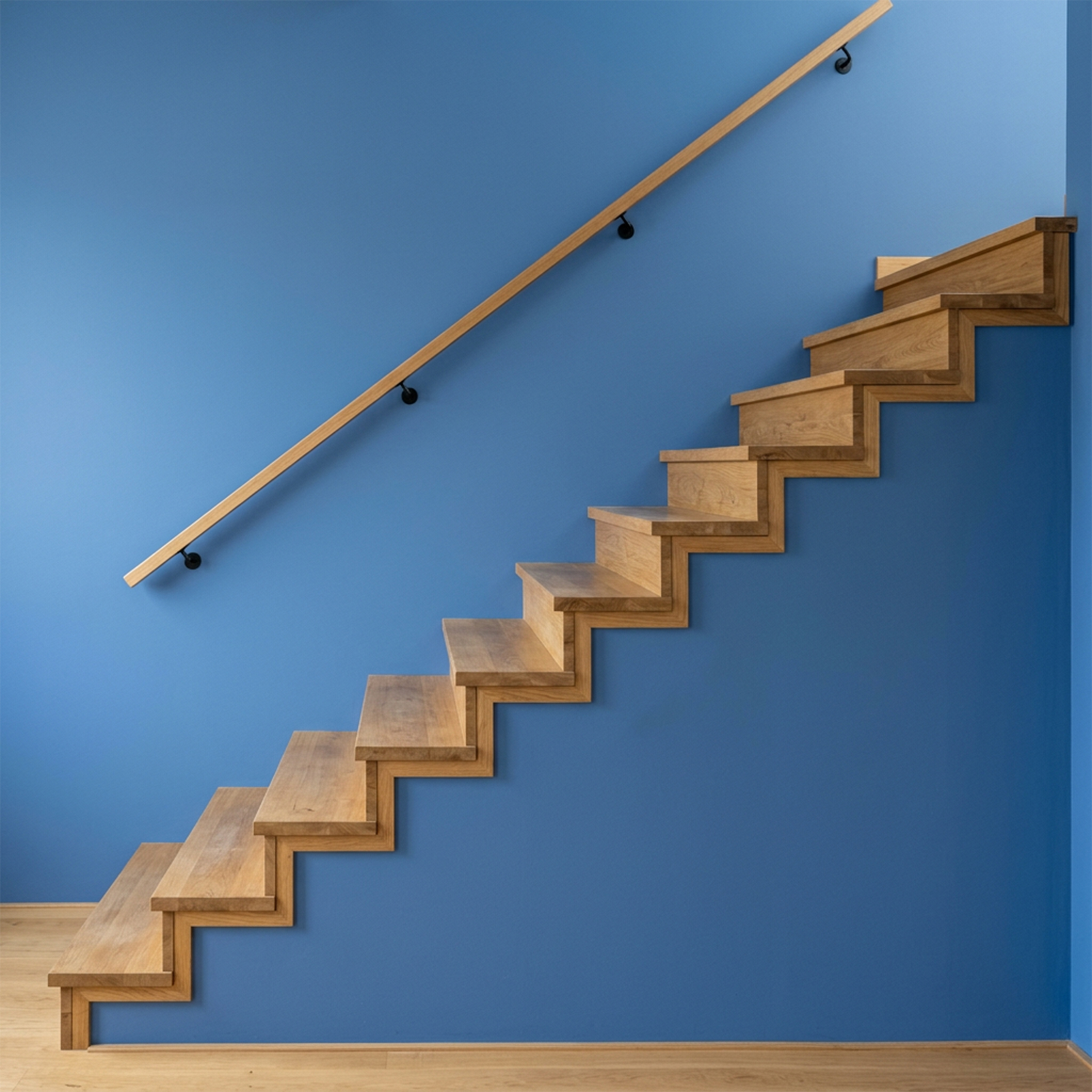
Now imagine a staircase rising from lower left to upper right.
Simple steps.
One after another.
At the bottom of the staircase is the feeling of constriction.
The stuffy nose.
The heavy mind.
The lingering attachment to past and future.
At the top of the staircase is openness.
Fresh breathing.
Lightness.
Ease.
Begin climbing.
One breath.
One step.
With each inhalation, rise.
With each exhalation, settle onto the next step.
As you climb, glance downward.
You can still see remnants of old thoughts resting on the steps below.
But they no longer need to be carried.
Those steps have already been climbed.
As you continue upward, the air becomes fresher.
The breath becomes easier.
The body feels lighter.
The mind becomes quieter.
And something interesting happens.
The top of the staircase keeps extending upward.
What first appeared to be the goal now becomes another step.
And another.
And another.
Yet there is no frustration in this.
Only openness.
As you continue climbing, you begin to sense something beyond the staircase itself.
A feeling of spaciousness.
Flow.
Weightlessness.
Freedom.
Ahead of you is a great dome representing ordinary thought, sensation, and conventional reality.
Near the top of the dome is a circular opening.
A porthole.
As you approach, you can feel a breeze moving through it.
You rise toward the opening.
Closer.
Closer.
Until your head gently passes through.
For a moment you are looking beyond the familiar structures of thought.
Beyond the need to define.
Beyond the need to compare.
Beyond the need to become.
Floating.
Receiving.
Open.
Unlimited.
Ungrounded.
Free.
Remain there for a few moments.
Resting in the direct experience of breathing.
Nothing to achieve.
Nothing to hold.
Nothing to become.
Simply the openness that has been present all along.
Allow the breath to flow naturally.
Allow awareness to rest in that openness.
And when you are ready, gently return your attention to the room, carrying with you the recognition that the air inside the bubble and the air outside the bubble were never separate.
Only the appearance of separation created the illusion.
The openness was present all along.

 Spiritual Gravity