

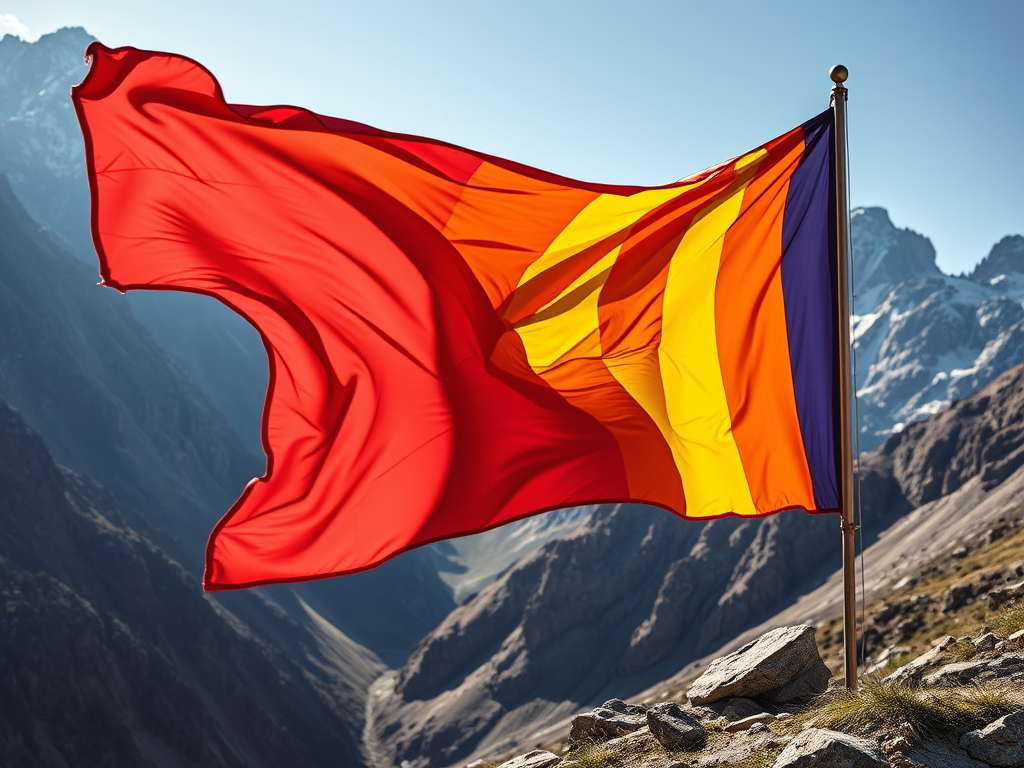
The self, as we experience it, is like a flag waving in the wind. It appears solid and independent, but in reality, it is the result of multiple forces acting together—the wind, the flagpole, the fabric itself. The motion of the flag is not intrinsic to the flag; it is a response to the conditions around it. Similarly, what we call the “self” emerges from the interplay of sensations, perceptions, thoughts, relationships, and awareness, much like concentric rings forming around a magnet placed beneath a vibrating sheet of iron filings. The rings are not an object in themselves—they are patterns formed by underlying forces.
In this way, the sense of self arises from the confluence of these dynamic energies. We wake up each morning to a familiar mind, just as we return to a cabin on a ship that, through repetition, begins to feel like home. But is it truly our home, or just the place we temporarily settle into? Is the self a stable, enduring entity, or simply the meeting point of all these rings—constantly shifting yet appearing whole?
The mountain analogy offers another view. When we are at the base, we see reality through the lens of liking and disliking, as if they are two opposing sides. The higher we climb—through awareness, through understanding—the closer these opposites come together, until from the peak, there is no longer a distinction between one side and the other. The duality collapses into a singular experience.
So why does this matter? What is the value of contemplating these rings, these patterns, these illusions of solidity? Because suffering (confusion, irritation, annoyance) comes from clinging to the illusion of separateness. When we believe the self is fixed and independent, we struggle to control, defend, and define it. But if the self is simply the movement of conditions, like a flag in the wind or rings around a magnet, then there is nothing to cling to. We can let go.
Letting go does not mean losing identity—it means recognizing that identity is fluid, responsive, and interwoven with everything else. It means seeing that we are not separate from the wind, the mountain, the rings of energy, or the awareness that perceives them.
When we stop trying to hold onto the flag as if it is something apart from the wind, we realize:
we are not the flag:
we are the wind moving through.

 Spiritual Gravity