

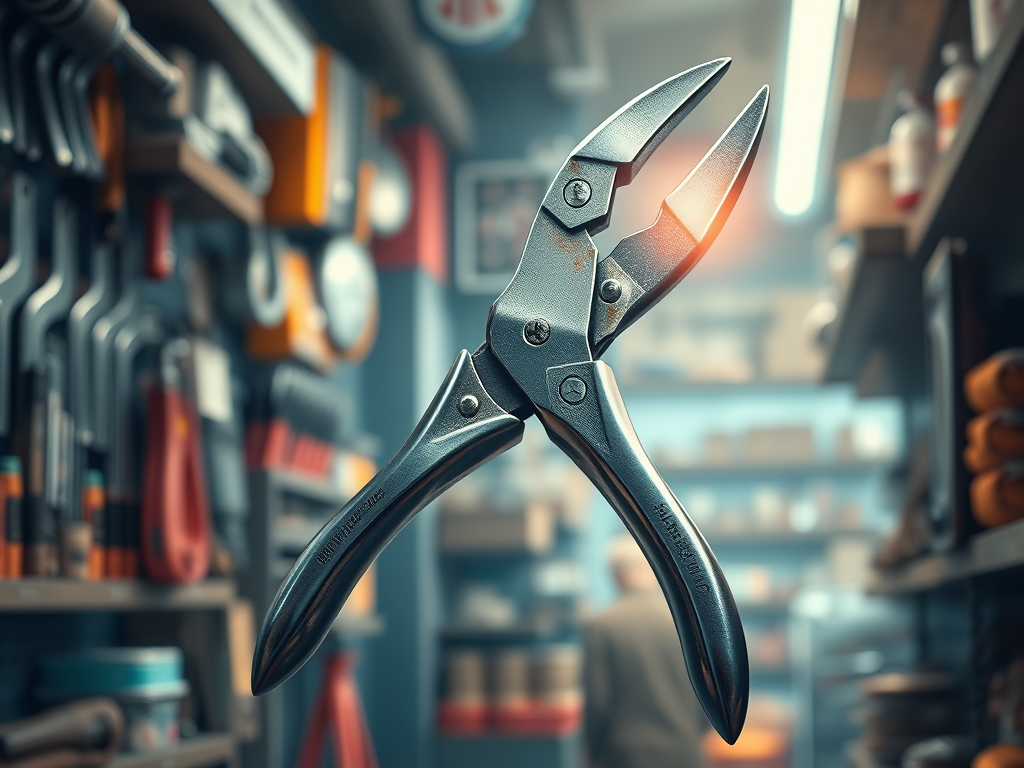
A man walked into a tool store.
Rows and rows of pliers—needle-nose, locking, cutting, bending—each made for something precise.
He wanted them all.
How could he not? Each one did something the others could not.
But he could not carry the store.
So he left with one simple pair.
At first, it felt insufficient.
The work was rough. Not perfect. Not refined.
But slowly, something changed—his hands learned.
His grip adjusted. His eye sharpened. His timing improved.
And he began to see: this one tool could do more than he thought.
When he met something it truly could not do, he remembered—ah… there is a place for that.
And when needed, he could return.
But most of the time, the simple pliers were enough.
Not because they were perfect—but because his hands were now awake.
Later, he discovered something closer than any tool.
Not something he could buy. Not something he could carry.
Something that had always been with him—but he had never learned how to use.
The breath.
At first, it was like wearing clothes he didn’t understand.
Always there—but unnoticed, untrained.
So he began, the same way he had with the pliers.
Awkwardly.
Feeling it. Losing it. Returning again.
Slowly, something changed—the breath became familiar, then reliable, then steady.
And he saw: this was the simplest tool of all—but it had to be learned.
Now, when something arose, he returned to the breath.
From there, his hands knew what to do.
Sometimes the simple pliers. Sometimes a more refined tool from the store.
And no matter how specialized the tool, its foundation was this recognition.

 Spiritual Gravity