

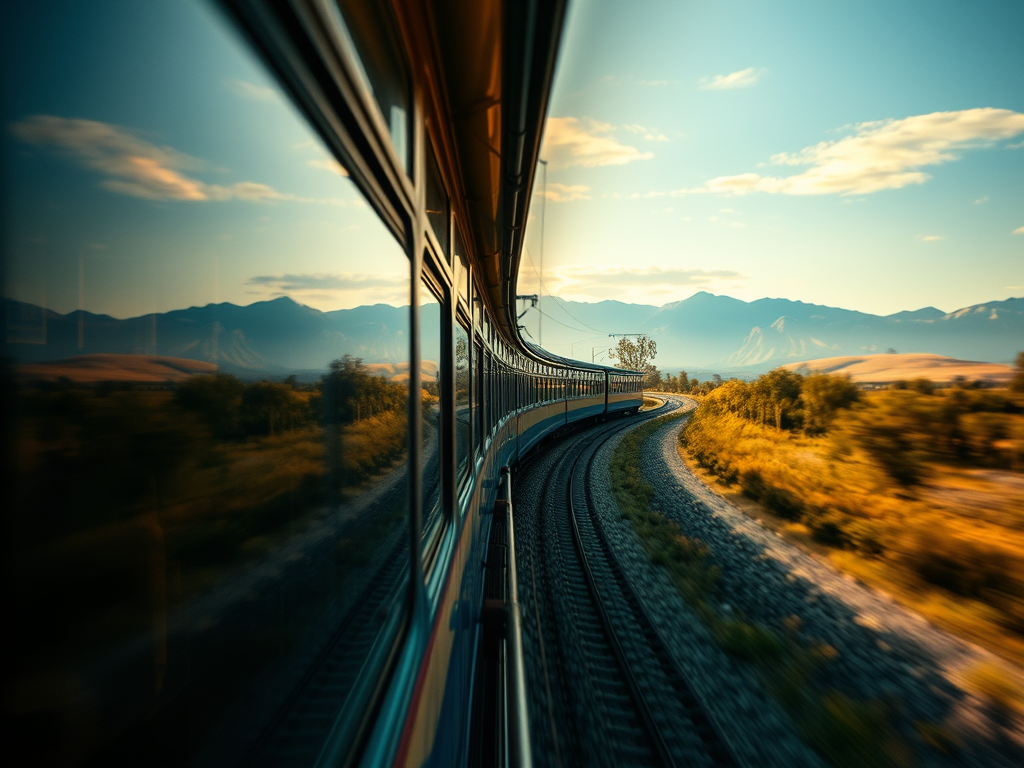
Today the breath felt like a train — a continuous ride that never stops as long as I’m alive. It has its ups and downs, long stretches and short ones, heavy moments and light ones. But whether the ride is smooth or uneven, I’m still on it, always. And just like being on a train, when I’m riding the breath, everything I pass becomes scenery. The objects of life, the circumstances, the people, the situations… they move by. I see them, I notice them, but I can’t jump out and manipulate them. I’m just watching. If awareness stays with the breath, then the rest becomes observation — not entanglement. Emotions might arise like flashes of landscape, but the train keeps going, the breath keeps moving, and they pass.
What was interesting today was noticing how the “mind centers” can activate directly, without any outward stimulus. The sensation of beauty, for example — it can appear by itself, without looking at something we label beautiful. Usually a picture or sound triggers it, but the center can just light up on its own. That was surprising: realizing that the experience we think comes from an object is actually a capacity inside the mind, and the object is only one way of turning it on.
Then there was the image of a chess game with God. When God makes a perfect move, I can either surrender immediately or imagine I still have a thousand moves left to struggle through. If I can recognize the moment for what it is, any single move — any moment of life — can be the point of surrender. Not giving up, but stopping the inner fight, letting go, and then simply being carried by the ride.
The whole life ride — breath to breath, birth to death — feels like that train. At the end of it, the question might be: Did you enjoy the ride, or were you just being dragged along?
And woven through all of this is the relationship between hope, prayer, and surrender.
Hope and surrender feel like opposites. Hope keeps looking for a solution, a next move, one more possibility. Surrender is the moment I stop searching. It’s the moment in the chess game when, instead of imagining a thousand more moves to make, I recognize the position and lay my king down. There’s a relief in that — the release of the effort to fix or solve.
Once hope has been released and surrender has truly happened, prayer begins to look different. Prayer isn’t more hoping. Prayer at that stage is just asking — without leaning forward into desire, without expecting an answer, without trying to influence the outcome. It’s not bargaining or pleading. True prayer doesn’t come from hope; it comes from the openness that follows surrender. It’s the willingness to speak honestly from the place where I’ve stopped trying to control.
Hope reaches outward.
Surrender releases inward.
Prayer speaks from the stillness that remains.

 Spiritual Gravity